


Invited tutorial speakers
Six hands-on sessions run alongside the main programme, covering research workflows, bibliometrics, powerline communication, edge AI sensing, efficient computer vision and scientific manuscript writing.
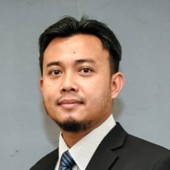
Assoc. Prof. Ts. Dr. Mohd Noor Abdullah
Universiti Tun Hussein Onn Malaysia
“Smarter Research Workflows: Integrating Mendeley, Google Gemini and Gemini Notebook”
A practical 90-minute guide to building a smoother research workflow using Mendeley, Google Gemini and Gemini Notebook (formerly NotebookLM). Organise literature and format citations effortlessly, summarise complex ideas and outline papers, and chat directly with uploaded PDFs for source-backed insights — with simple strategies to read faster, write better, and maintain academic integrity.

Assoc. Prof. Ir. Dr. Wong Wei Kitt
Curtin University Malaysia
“Introduction to Bibliometric Review using VOSviewer”
Bibliometric analysis offers a systematic, quantitative approach to examining the structure and trends of research literature. Participants will prepare bibliographic data, construct and interpret co-authorship, citation, co-citation, bibliographic coupling and keyword co-occurrence networks, and identify major clusters and emerging themes. No prior experience with bibliometric software is required.
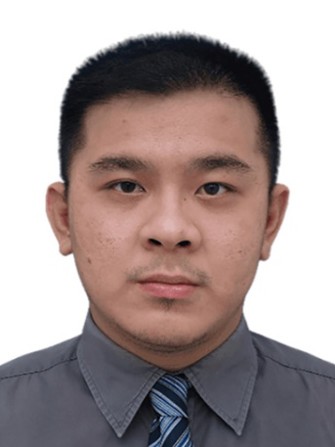
Assoc. Prof. Dr. Filbert Juwono
Xi’an Jiaotong-Liverpool University
“Powerline Communication: Green Infrastructure, Issues, and Intelligent Futures”
Powerline Communication (PLC) uses the existing electrical grid for data transmission without new copper or fibre infrastructure, yet faces severe channel noise, time-varying impedance and limited scalability in dense networks. This tutorial reviews state-of-the-art mitigation techniques and explores how artificial intelligence can transform PLC into a resilient, self-optimising backbone for smart grids and IoT ecosystems.
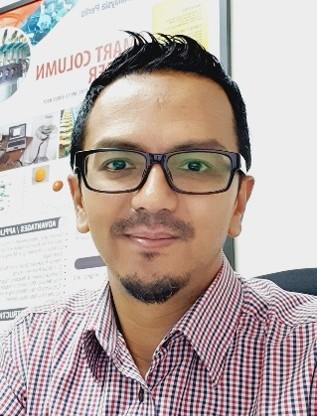
Assoc. Prof. Ir. Dr. Mohd Hafiz Fazalul Rahiman
Universiti Malaysia Perlis
“Smart Sensors and Edge AI for Sustainable Monitoring: Practical Design, Signal Processing and Industrial Applications”
Covering sensor selection, data acquisition, signal conditioning, feature extraction and the deployment of lightweight AI models on embedded and edge platforms. Emphasis falls on energy-efficient design, real-time processing and the trade-offs between accuracy, latency, complexity and power — with industrial case studies in environmental monitoring, agriculture, infrastructure and process control.
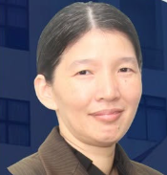
Assoc. Prof. Ir. Dr. Farrah Wong
Universiti Malaysia Sabah
“From Pixels to Patches: Green AI and Lightweight Alternatives for Vision Transformers”
An introduction to Vision Transformers (ViTs) and how self-attention processes structured image patches to capture global context. The session addresses their high computational cost and data-hungry nature through low-data methodologies and Green AI principles, evaluating the environmental footprint of large models and exploring lightweight alternatives such as MobileViT and hybrid architectures for resource-constrained environments.

Assoc. Prof. Alpha Agape Gopalai
School of Engineering, Monash University Malaysia
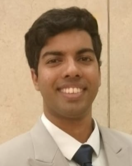
Dr. Chamalka Kenneth Perera
Monash University Malaysia
“Drafting High-Impact Engineering Manuscripts: Structure, Narrative, Responsible AI, and Peer Review”
A practical, end-to-end framework for turning complex technical data and results into publication-ready manuscripts. Participants work through building a narrative arc, structuring the IMRaD format, presenting quantitative data and highlighting contributions — plus the ethical use of AI writing tools, common pitfalls, and navigating peer review for top-tier journals.